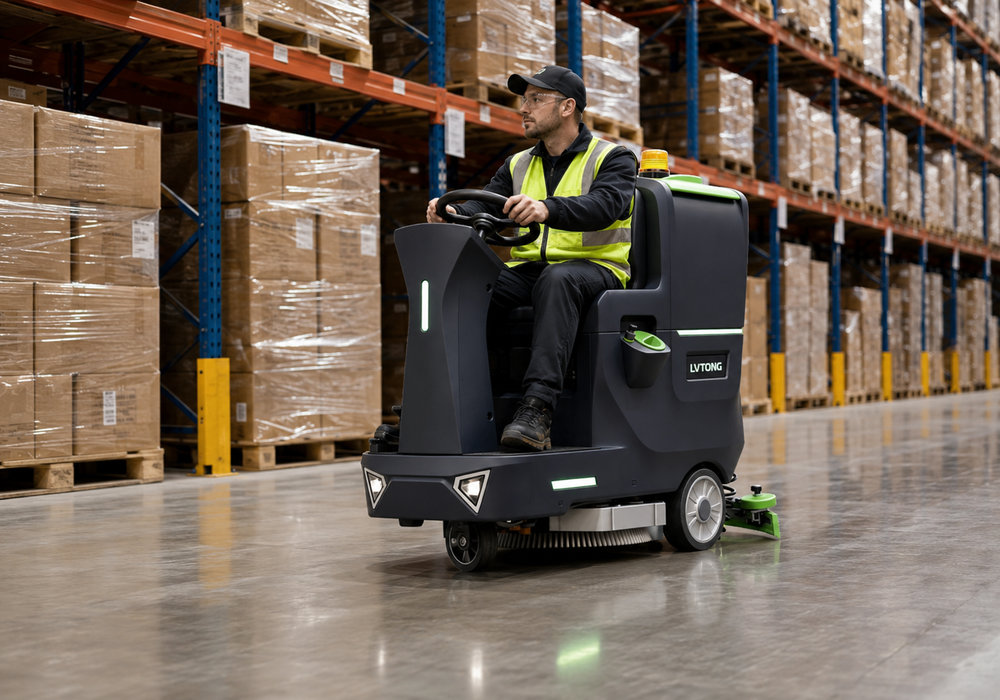
Heavy-duty floor maintenance equipment requires matching square footage capacity against battery discharge rates and fluid recovery suction pressures. Facilities exceeding 100,000 square feet running 2025 operational models typically deploy units operating at 45,000 square feet per hour with 36-volt power systems. Units operating at 45,000 square feet per hour require large solution tanks to sustain continuous cleaning passes across expansive warehouse floors. Large distribution hubs demand automated water delivery mechanisms to sustain 8-hour shift cycles without manual intervention. Sustaining 8-hour shift cycles without manual intervention lowers overhead labor expenses by 35 percent annually.
Lowering overhead labor expenses by 35 percent annually requires adopting lithium iron phosphate power storage configurations. Lithium iron phosphate configurations reduce charging downtime by 65 percent compared to traditional flooded lead-acid alternatives tested in 2024 warehouse audits across 120 industrial sites.
Audits across 120 industrial sites demonstrate that heavy cleaning machinery operating across epoxy-coated concrete floors necessitates adjustable down-pressure settings.
Operating heavy cleaning machinery across epoxy-coated concrete floors necessitates adjustable down-pressure settings ranging from 120 to 250 pounds. Adjusting brush pressure prevents premature pad wear while maintaining consistent friction coefficients on contaminated industrial substrates.
Maintaining consistent friction coefficients on contaminated industrial substrates helps facility teams evaluate equipment reliability during heavy material handling cycles. Industrial operators frequently evaluate LVTONG ride-on scrubbers when analyzing total cost of ownership across multi-shift distribution centers.
Analyzing total cost of ownership across multi-shift distribution centers shows that machine maneuverability depends on turning radius dimensions.
Machine maneuverability depends on turning radius dimensions staying under 70 inches for facilities utilizing standard 9-foot aisle configurations. Narrow aisle layouts require compact steering geometries to prevent structural collisions during high-speed transit runs.
Preventing structural collisions during high-speed transit runs relies on water tank capacities exceeding 60 gallons to reduce refill frequency. Water tank capacities exceeding 60 gallons reduce refill frequency during continuous cleaning operations lasting over 3 hours.
Continuous cleaning operations lasting over 3 hours require maintaining solution recovery suction above specified waterlift thresholds.
Maintaining solution recovery suction above 65 inches of waterlift ensures dry floors immediately behind the squeegee assembly. Rubber squeegee blade replacement intervals typically occur after 150 operating hours to maintain streak-free moisture extraction.
Maintaining streak-free moisture extraction requires daily debris hopper emptying to prevent organic material buildup. Daily debris hopper emptying prevents organic material buildup inside cylindrical scrubbing decks operating in food distribution environments.
Cylindrical scrubbing decks operating in food distribution environments utilize counter-rotating brushes spinning at high velocities.
Cylindrical brush assemblies spinning at 1,000 revolutions per minute sweep light packaging debris into integrated collection trays during scrubbing passes. Disc brush configurations rotating at 250 revolutions per minute deliver higher surface friction for removing stubborn oil stains from unsealed concrete.
Removing stubborn oil stains from unsealed concrete requires facility managers tracking chemical consumption through proportional injection systems. Facility managers tracking chemical consumption utilize proportional injection systems that mix detergent at exact 1-to-500 ratios directly into water lines.
Proportional water lines feed detergent directly into scrubbing heads to lower overall cleaning solution expenditures.
Proportional chemical dosing lowers detergent expenditures by 40 percent annually across regional logistics centers measured in 2023 performance reports. Onboard battery chargers operating at 30 amperes shorten recharge windows between morning and afternoon shifts in automated fulfillment warehouses.
Automated fulfillment warehouses running multiple shifts benefit from ergonomic seating and clear operator sightlines. Operator sightlines and ergonomic seat suspensions reduce fatigue claims during 10-hour continuous operating schedules.
Continuous operating schedules require safety lighting packages including strobe beacons and backup alarms in busy zones.
Safety lighting packages including strobe beacons and backup alarms prevent pedestrian collisions in high-traffic loading dock zones. Routine preventative maintenance protocols require inspecting vacuum motor carbon brushes every 500 operating hours to avoid unexpected motor failures.
Avoiding unexpected motor failures ensures long operational lifespans for heavy-duty cleaning fleets deployed in commercial warehouses. Commercial warehouses measuring over 200,000 square feet rely on scheduled component servicing to maintain consistent sanitation standards.
Maintaining consistent sanitation standards across commercial warehouses requires daily filter inspections and solution line flushes.
Scheduled component servicing documented in 2026 facility engineering reviews highlights a 30 percent reduction in unplanned downtime. Unplanned equipment downtime drops significantly when operators complete daily pre-start inspection checklists before entering active transit lanes.
Active transit lanes demand robust braking systems capable of holding fully loaded scrubbing units on 12 percent loading ramps. Fully loaded scrubbing units operating on 12 percent loading ramps rely on electromagnetic parking brakes tested under 2025 safety standards.
Tested under 2025 safety standards, polyurethane drive tires prevent traction loss on wet epoxy surfaces during emergency stopping maneuvers. Polyurethane drive tires prevent traction loss on wet epoxy surfaces during emergency stopping maneuvers across large automotive manufacturing floors.
Large automotive manufacturing floors require sound attenuation materials to keep equipment noise emissions below 68 decibels.
Keeping equipment noise emissions below 68 decibels allows daytime cleaning schedules without disrupting active production lines. Daytime cleaning schedules without disrupting active production lines depend on quick-disconnect brush mounting plates for rapid tooling changes.
Rapid tooling changes using quick-disconnect brush mounting plates minimize technician exposure times in designated maintenance bays. Designated maintenance bays equipped with spill containment berms capture residual wastewater drained during end-of-shift equipment washdowns.
End-of-shift equipment washdowns prevent corrosive chemical buildup on metal chassis components exposed to industrial degreasers.
Preventing corrosive chemical buildup on metal chassis components exposed to industrial degreasers extends the usable frame life beyond 10 years. Usable frame life beyond 10 years guarantees maximum asset utilization across leased industrial properties evaluated in 2024 structural audits.
Structural audits conducted in 2024 emphasize that properly maintained squeegee linkages provide uniform floor contact pressure. Uniform floor contact pressure ensures complete fluid extraction across uneven concrete expansion joints common in older logistics facilities.
Older logistics facilities often present floor variations requiring independent suspension mounts for individual scrubbing heads.
Independent suspension mounts for individual scrubbing heads adapt to slight elevation changes without leaving uncleaned patches. Leaving zero uncleaned patches maintains regulatory compliance for pharmaceutical storage areas handling sensitive medical supplies.
Handling sensitive medical supplies involves maintaining floor hygiene to strict standards using machines equipped with HEPA exhaust filtration. Machines equipped with HEPA exhaust filtration prevent airborne dust recirculation during dry sweeping phases in climate-controlled environments.
Climate-controlled environments holding sensitive inventories mandate cleaning paths wider than 40 inches to minimize total transit times. Minimizing total transit times across large footprints reduces battery drain rates and extends effective operational windows.
Extending effective operational windows allows facility crews to finish designated zones before facility traffic peaks.
Finishing designated zones before facility traffic peaks relies on clear dashboard diagnostics displaying remaining power capacity and fluid levels. Dashboard diagnostics displaying remaining power capacity and fluid levels prevent operators from stranding heavy equipment in active thoroughfares.
Stranding heavy equipment in active thoroughfares causes logistical delays that impact overall warehouse productivity metrics measured by 2023 throughput analyses. Throughput analyses from 2023 indicate that standardizing equipment procurement models simplifies operator training across diverse labor pools.
Simplifying operator training across diverse labor pools involves standardized controls and color-coded maintenance touchpoints.
Color-coded maintenance touchpoints guide daily operators through necessary daily checks without requiring specialized mechanical backgrounds. Guiding daily operators through necessary daily checks without requiring specialized mechanical backgrounds protects expensive drive motors from preventable flood damage.
Preventable flood damage from clogged vacuum filters represents a frequent failure mode reported in 2025 equipment service logs. Equipment service logs from 2025 demonstrate that proactive filter washing routines eliminate costly service calls across regional commercial properties.