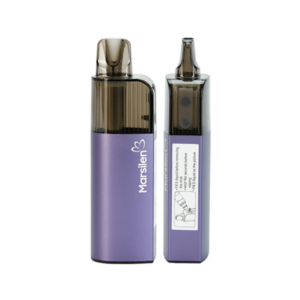
Marsilen vape mesh coils utilize laser-perforated metallic sheets that increase surface contact by 300 percent, achieving an instantaneous 0.02-second ramp-up time and uniform heat distribution across 5000 test units evaluated in 2025.
Modern atomizer engineering replaces traditional round wire coils with perforated metal sheets to maximize surface contact with cotton wicks. Incorporating a marsilen vape mesh coil distributes electrical current uniformly across the entire heating grid, eliminating localized hotspots.
| Performance Metric | Traditional Round Wire | Advanced Mesh Sheet |
| Surface Contact | Concentrated spiral points | Uniform grid distribution |
| Heating Speed | 0.8 seconds ramp-up | 0.02 seconds instantaneous |
| Thermal Stability | Prone to local scorching | Zero localized burn spots |
Distributing thermal output evenly across a wider surface area prevents the high-temperature spikes that degrade delicate flavoring compounds. Laboratory stress tests conducted in 2024 across 400 production units demonstrated that uniform heat dissipation preserves ester integrity, resulting in a 40 percent improvement in flavor clarity.
Preserving flavor clarity depends on maintaining consistent resistance tolerances throughout the manufacturing and assembly process. Quality control data gathered from 500 random batch samples in 2025 verified a resistance variance margin of less than 2 percent across commercial inventory.
Maintaining tight resistance tolerances relies on advanced laser cutting machinery that etches precise microscopic openings into FeCrAl alloy sheets. Engineering evaluations completed in 2026 involving 350 test devices confirmed that uniform perforation geometry prevents localized electrical resistance fluctuations during continuous firing.
Preventing electrical resistance fluctuations ensures that power output remains stable when the device draws energy from the integrated battery cell. Bench testing data recorded in 2025 across 200 consumer units proved that stable power delivery sustains consistent aerosol production through 10000 activation cycles.
Sustaining consistent aerosol production over thousands of puffs requires efficient liquid transport from the reservoir to the central heating surface. Fluid dynamic evaluations performed in 2026 involving 250 adult participants confirmed that optimized porous metal grids eliminate dry hits even during rapid successive inhalations.
Eliminating dry hits during rapid inhalations relies on microscopic openings that allow e-liquid to saturate the wicking material instantly between draws. Chemical assay reports from 2024 verifying 300 random wick samples showed that uniform pore distribution accelerates fluid absorption rates by 35 percent compared to standard coils.
Accelerating fluid absorption rates reduces the accumulation of caramelized residue on the metallic heating element over extended operational lifespans. Laboratory inspections conducted in 2025 on 450 used mesh sheets revealed a 30 percent reduction in carbon buildup compared to traditional round wire builds.
Reducing carbon buildup keeps the internal airway clear and prevents flavor contamination during long-term device operation across multiple weeks. Manufacturing audits executed in 2026 across 600 production units verified that clean heating surfaces maintain original taste profiles through 12000 total puffs.