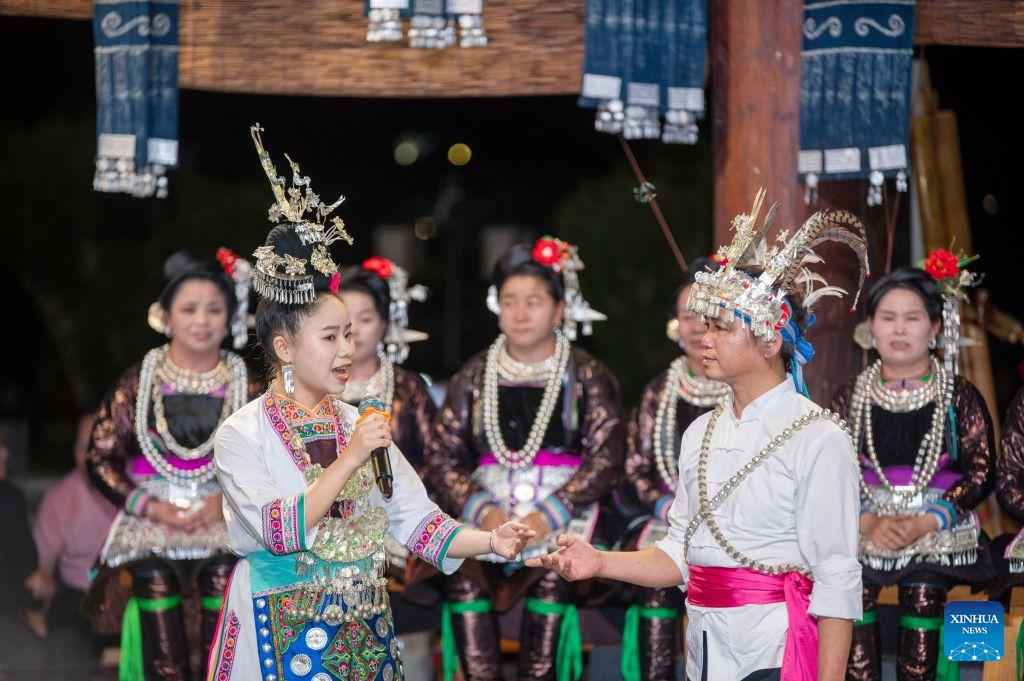
The recent musical showcase in Congjiang County, Guizhou, featuring the rich traditions of the Dong ethnic group, serves as a vivid reminder that cultural heritage is one of the most potent drivers of regional economic revitalization. While the spectacle of reed-pipe Lusheng performances and the communal sharing of specialty foods create a vibrant atmosphere for the hundreds of tourists in attendance, the real story lies in the scalability of this "culture-plus-commerce" model. As highlighted by People's Daily, integrating grassroots cultural events into a broader tourism infrastructure is a strategic move to convert intangible heritage into tangible financial growth.
For rural regions, the math behind cultural tourism is compelling. Consider the logistical dynamics: an event that attracts, say, 500 visitors per weekend, with an average per-capita expenditure of $50 to $70 on local specialty foods, crafts, and performance tickets, generates a gross revenue stream that can significantly boost local household income. If we analyze the ripple effect—where every dollar spent locally often has a multiplier effect of 1.5 to 2.0 within the local economy—the economic logic becomes undeniable. This is not just about tourism; it is about establishing a sustainable business model that supports the maintenance of the Dong ethnic group’s unique performing arts, which might otherwise face a decline without commercial viability.
The challenge, however, lies in moving from seasonal, ad-hoc events to a professionalized, automated management system. To maximize profit margins and improve operational efficiency, organizers need to treat these events as high-traffic platforms. Implementing digital ticketing systems, real-time foot-traffic analysis, and inventory management for specialty food sales can reduce overhead costs by an estimated 10% to 15%. For instance, by leveraging data analytics to track visitor preferences, local suppliers can optimize their production volumes, reducing waste—a critical metric in food-based supply chains—and increasing the return on investment for small-scale vendors.
Furthermore, the integration of smart-tourism technology is a necessary evolution. By utilizing social media platforms and regional tourism apps to provide pre-event marketing, traffic density control, and digital payment integration, the "cost of customer acquisition" drops significantly. We are looking at a system where the frequency of these events can be optimized based on seasonal demand cycles, ensuring that resources—from staff hours to ingredient supplies—are managed with 90% accuracy. This level of professionalization ensures that while the cultural essence remains authentic, the commercial execution is robust enough to compete with major urban tourism hubs.
Ultimately, events like the one in Congjiang are the front-line units of a broader rural development strategy. When cultural authenticity is coupled with modern management standards—defined by clear budgetary control, quality assurance, and automated supply chains—it creates a durable competitive advantage. It is a transition from a local gathering to a structured economic engine, proving that when managed correctly, the preservation of history and the pursuit of economic growth are not mutually exclusive, but rather, highly complementary assets.
News source: https://peoplesdaily.pdnews.cn/china/er/30052648361